| |||||||||||||||||||
| |||||||||||||||||||
Larger |
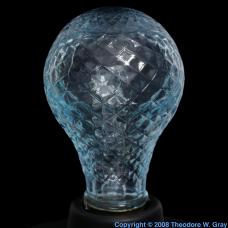
Inefficient daylight bulb. Horribly inefficient blue-filtered incandescent bulb Source: Hardware Store Contributor: Theodore Gray Acquired: 25 April, 2009 Text Updated: 25 April, 2009 Price: $1 Size: 5" Purity: <1% |
||||||||||||||||||
Larger | Spin | 3D |
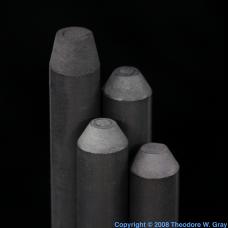
Praseodymium-core carbon rods. Rods like this (about 1/2" diameter) are used, or at least used to be, in the motion picture industry to create large amounts of light for filming. They contain a core (visible in this photo) of a mixture of rare earths which, when vaporized in the arc, provide a daylight spectrum of light. This use is very similar to the way the rare earths provide daylight spectrum light in modern sealed arc lights, just out in the open air. Source: eBay seller saturngroup Contributor: Theodore Gray Acquired: 16 April, 2009 Text Updated: 17 April, 2009 Price: $22/box Size: 12" Purity: <20% |
||||||||||||||||||
Larger | Spin | 3D |
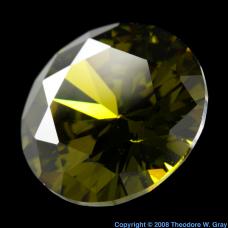
Fake peridot. Peridot is a valuable type of gemstone. This is cheap cubic zirconia colored to look like peridot, in much the same way that uncolored cubic zirconia simulates diamond. What makes it interesting to me is that praseodymium is used to impart just the right fake shade of yellow to cubic zirconia to make it look like peridot. There are not a whole lot of other things you can do with praseodymium, so I'll take it! Source: Pehnec Gems Contributor: Theodore Gray Acquired: 24 March, 2009 Text Updated: 24 March, 2009 Price: $1 Size: 0.3" Purity: 1% |
||||||||||||||||||
Larger |
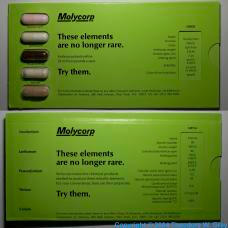
Advertising set. This lovely little set of rare earth oxides was made to promote the fact that rare earths really aren't very rare. Once the technology was developed to separate and purify then economically, they became quite common in fact. There is no date on this piece which is a pity, but I would guess it was made in the 1960's. Source: SoCal (Nevada), Inc Contributor: Theodore Gray Acquired: 23 July, 2004 Price: $20 Size: 8" Purity: >20% |
||||||||||||||||||
Larger |
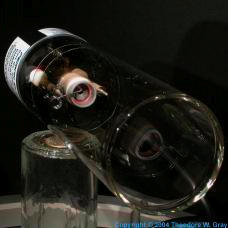
Hollow cathode lamp. Lamps like this are available for a very wide range of elements: Click the Sample Group link below to get a list of all the elements I have lamps like this for. They are used as light sources for atomic absorption spectrometers, which detect the presence of elements by seeing whether a sample absorbs the very specific wavelengths of light associated with the electronic transitions of the given element. The lamp uses an electric arc to stimulate the element it contains to emit its characteristic wavelengths of light: The same electronic transitions are responsible for emission and absorption, so the wavelengths are the same. In theory, each different lamp should produce a different color of light characteristic of its element. Unfortunately, the lamps all use neon as a carrier gas: You generally have to have such a carrier gas present to maintain the electric arc. Neon emits a number of very strong orange-red lines that overwhelm the color of the specific element. In a spectrometer this is no problem because you just use a prism or diffraction grating to separate the light into a spectrum, then block out the neon lines. But it does mean that they all look pretty much the same color to the naked eye. I've listed the price of all the lamps as $20, but that's really just a rough average: I paid varying amounts at various eBay auctions for these lamps, which list for a lot more from an instrument supplier. (Truth in photography: These lamps all look alike. I have just duplicated a photo of one of them to use for all of them, because they really do look exactly the same regardless of what element is inside. The ones listed are all ones I actually have in the collection.) Source: eBay seller heruur Contributor: Theodore Gray Acquired: 24 December, 2003 Price: $20 Size: 8" Purity: 99.9% Sample Group: Atomic Emission Lamps |
||||||||||||||||||
Larger |
Sample from the Everest Set. Up until the early 1990's a company in Russia sold a periodic table collection with element samples. At some point their American distributor sold off the remaining stock to a man who is now selling them on eBay. The samples (except gases) weigh about 0.25 grams each, and the whole set comes in a very nice wooden box with a printed periodic table in the lid. To learn more about the set you can visit my page about element collecting for a general description and information about how to buy one, or you can see photographs of all the samples from the set displayed on my website in a periodic table layout or with bigger pictures in numerical order. Source: Rob Accurso Contributor: Rob Accurso Acquired: 7 February, 2003 Text Updated: 29 January, 2009 Price: Donated Size: 0.2" Purity: >99% |
||||||||||||||||||
Larger | 3D |
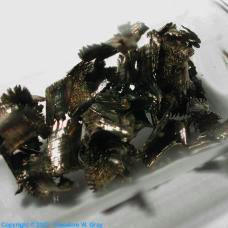
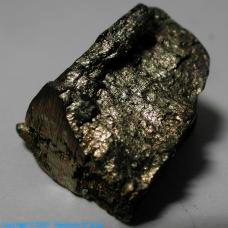
Lump. This sample arrived with a full set of lanthanides at a time when I was missing europium, terbium, holmium, ytterbium, and of course lutetium. This very kind donation from Max Whitby of The Red Green & Blue Company in England completed my element collection, to the extent that it gave me a plausible sample of every element one can plausibly have a sample of. (The Red Green & Blue Company is selling a periodic table collection containing similar samples of the same stuff, and if you want a ready-made collection of elements, that's the first place I would look.) To learn more about the set you can visit my page about element collecting for a general description or the company's website which includes many photographs and pricing details. I have two photographs of each sample from the set: One taken by me and one from the company. You can see photographs of all the samples displayed in a periodic table format: my pictures or their pictures. Or you can see both side-by-side with bigger pictures in numerical order. The picture on the left was taken by me. Here is the company's version (there is some variation between sets, so the pictures sometimes show different variations of the samples): 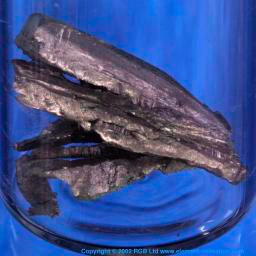 Source: Max Whitby of RGB Contributor: Max Whitby of RGB Acquired: 20 December, 2002 Text Updated: 11 August, 2007 Price: Donated Size: 0.5" Purity: 99.4% |
||||||||||||||||||
Larger | Spin | 3D |
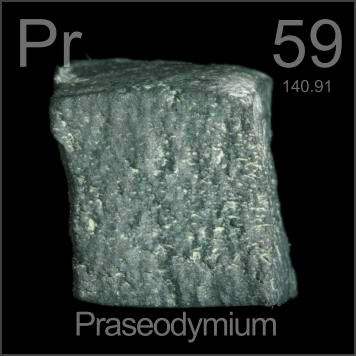
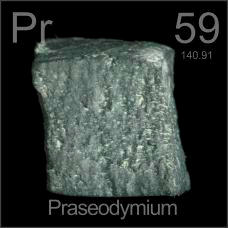
Cube under oil. This is a substantial cube of a relatively reactive rare earth (hence the "under oil" part). I chose this sample to represent its element in my Photographic Periodic Table Poster. The sample photograph includes text exactly as it appears in the poster, which you are encouraged to buy a copy of. 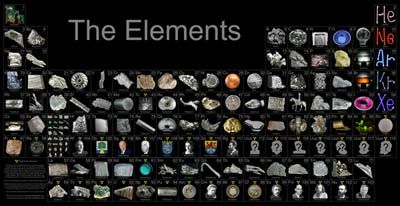 Source: David Franco Contributor: Ed Pegg Jr Acquired: 16 August, 2002 Text Updated: 4 May, 2007 Price: $43 Size: 0.4" Purity: 99.99% |
||||||||||||||||||
| |||||||||||||||||||
Larger |
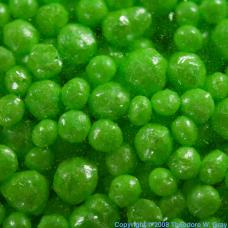
Praseodymium iodide. Praseodymium iodide, very pure, but sadly not mine, just borrowed for photography. Source: Anonymous Contributor: Anonymous Acquired: 17 April, 2009 Text Updated: 17 April, 2009 Price: None Size: 0.25" Composition: PrI3 |
||||||||||||||||||
Larger | Spin | 3D |
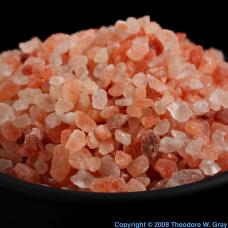
Himalayan sea salt. There is a list of 84 elements that seems to pop up repeatedly in the ingredient lists of "natural" mineral products, supplements, pills, and the like. Even, it turns out, in salt. Here then is the list of minerals claimed to be found in all-natural organic Himalayan sea salt: hydrogen, lithium, beryllium, boron, carbon, nitrogen, oxygen, fluoride, sodium, magnesium, aluminum, silicon, phosphorus, sulfur, chloride, calcium, scandium, titanium, vanadium, chromium, manganese, iron, cobalt, nickel, copper, zinc, gallium, germanium, arsenic, selenium, bromine, rubidium, strontium, yttrium, zirconium, niobium, molybdenum, ruthenium, rhodium palladium, silver, cadmium, indium, tin, antimony, tellurium, iodine, cesium, barium, lanthanum, cerium, praseodymium, samarium, europium, gadolinium, terbium, dysprosium, holmium, erbium, thulium, ytterbium, lutetium, hafnium, tantalum, tungsten, rhenium, osmium, iridium, platinum, gold, mercury, thallium, lead, bismuth, polonium, astatine, francium, radium, actinium, thorium, protactinium, uranium, neptunium and plutonium.I wish someone would tell these people that, for example, neptunium and plutonium do not occur in nature at all, let alone in salt. Unless, I suppose, if you count nuclear fallout as a "natural" source of ingredients. What bothers me most is what this says about the level of scientific literacy, both of the people selling the stuff, and the people buying it. Does no one actually read the list? Or do they read it an not realize how preposterous it is? It's enough to make you despair for the future of mankind. Pretty salt, though. Source: eBay seller saltwonders Contributor: Theodore Gray Acquired: 28 March, 2009 Text Updated: 4 April, 2009 Price: $15 Size: 0.25" Composition: NaClSbCsDyErEuGdHfHoInLaLuNdPrSmScThTlTeTbTmYbY |
||||||||||||||||||
Larger | Spin | 3D |
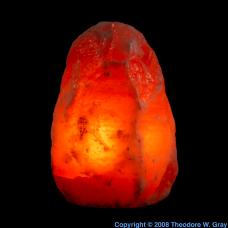
Himalayan salt lamp. A pretty hollow lamp made of solid rock salt from the Himalays. The composition I list is a partial list of the elements claimed to be in this type of salt (see my other Himalayan sea salt sample for a discussion of how silly this is). Source: eBay seller saltwonders Contributor: Theodore Gray Acquired: 28 March, 2009 Text Updated: 3 April, 2009 Price: $29 Size: 8" Composition: NaClSbCsDyErEuGdHfHoInLaLuNdPrSmScThTlTeTbTmYbY |
||||||||||||||||||
Larger | Spin | 3D |
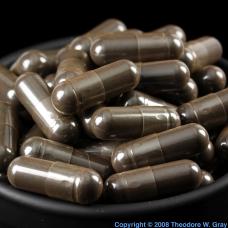
Insane mineral capsules. These minerals capsules are called "Immune Boost 77", from Morningstar Minerals. They are either being incredibly honest, or they really don't understand what they're saying when they list what amounts to nearly the entire periodic table on the label, as the "trace minerals" they contain. Here is the list in all its glory, typed in by my daughter in exchange for my paying for a membership in the Miley Cyrus fan club: Antimony, Barium, Beryllium, Bismuth, Boron, Bromine, Calcium, Carbon, Cerium, Cesium, Chloride, Chromium, Cobalt, Copper, Dysprosium, Erbium, Europium, Florine, Gadolinium, Gallium, Germanium, Gold, Hafnium, Holmium, Indium, Iodine, Iridium, Iron, Lanthanum, Lithium, Lutetium, Magnesium, Manganese, Molybdenum, Neodymium, Niacin, Nickel, Niobium, Osmium, Palladium, Phosphorus, Platinum, Potassium, Praseodymium, Rhenium, Rhodium, Rubidium, Ruthenium, Samarium, Scandium, Selenium, Silicon, Silver, Sodium, Strontium, Sulfur, Tantalum, Thallium, Thorium, Tellurium, Terbium, Thulium, Tin, Titanium, Tungsten, Vanadium, Ytterbium, Yttrium, Zinc, Zirconium. Some of them are just silly, like thulium, which has absolutely no biological function. Others are a bit scarier, like thallium and thorium that are deadly poisons, and tellurium, which makes you smell of rotten onions for weeks. Basically what they've done is list everything that occurs in even trace amounts in mixed monazite sand, which is kind of what the stuff inside looks like. The only reason they aren't seriously harmful (I assume) is that most of these are not actually present in any meaningful quantity. My attention is drawn to these and other similar mineral supplements every time I decide to see if anything interesting has popped up on eBay for one or another of the obscure rare earths. Generally speaking if you search eBay for those guys you get very little of interest unless you turn on the option to search the text of the item description as well as the titles. Then you get lots of trace mineral supplements that one can only hope don't actually contain them. Source: eBay seller grandma-adams Contributor: Theodore Gray Acquired: 24 March, 2009 Text Updated: 29 March, 2009 Price: $15 Size: 0.75" Composition: SbCsDyErEuGdHfHoInLaLuNdPrSmScThTlTeTbTmYbY |
||||||||||||||||||
Larger | Spin | 3D |
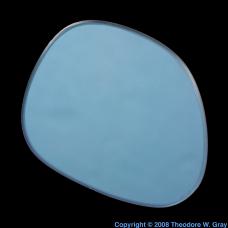
Didymium glasses. This is a lens from a pair of didymium eye glasses meant for glassblowers. The "di" refers to "two", the "dymium" refers to the two elements in the glass, which both end in "dymium". Those two are praseodymium and neodymium. Together they cause the glass to strongly absorb the sodium yellow emission line that creates the bring glow when glass is molten. Wearing them you can stare directly into the molten glass and see only a dull glow from the torch. Source: eBay Contributor: Theodore Gray Acquired: 24 March, 2009 Text Updated: 25 March, 2009 Price: $50 Size: 2" Composition: PrNd |
||||||||||||||||||
Larger | Spin | 3D |
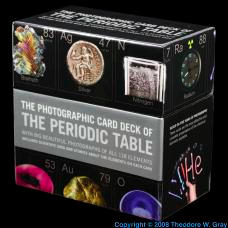
Photo Card Deck of the Elements. In late 2006 I published a photo periodic table and it's been selling well enough to encourage me to make new products. This one is a particularly neat one: A complete card deck of the elements with one big five-inch (12.7cm) square card for every element. If you like this site and all the pictures on it, you'll love this card deck. And of course if you're wondering what pays for all the pictures and the internet bandwidth to let you look at them, the answer is people buying my posters and cards decks. Hint hint. Source: Theodore Gray Contributor: Theodore Gray Acquired: 19 November, 2008 Text Updated: 28 October, 2017 Price: $35 Size: 5" Composition: HHeLiBeBCNOFNeNaMg AlSiPSClArKCaScTiVCrMn FeCoNiCuZnGaGeAsSeBrKr RbSrYZrNbMoTcRuRhPdAg CdInSnSbTeIXeCsBaLaCePr NdPmSmEuGdTbDyHoErTm YbLuHfTaWReOsIrPtAuHgTl PbBiPoAtRnFrRaAcThPaUNp PuAmCmBkCfEsFmMdNoLrRf DbSgBhHsMtDsRgCnNhFlMcLvTsOg |
||||||||||||||||||
| |||||||||||||||||||